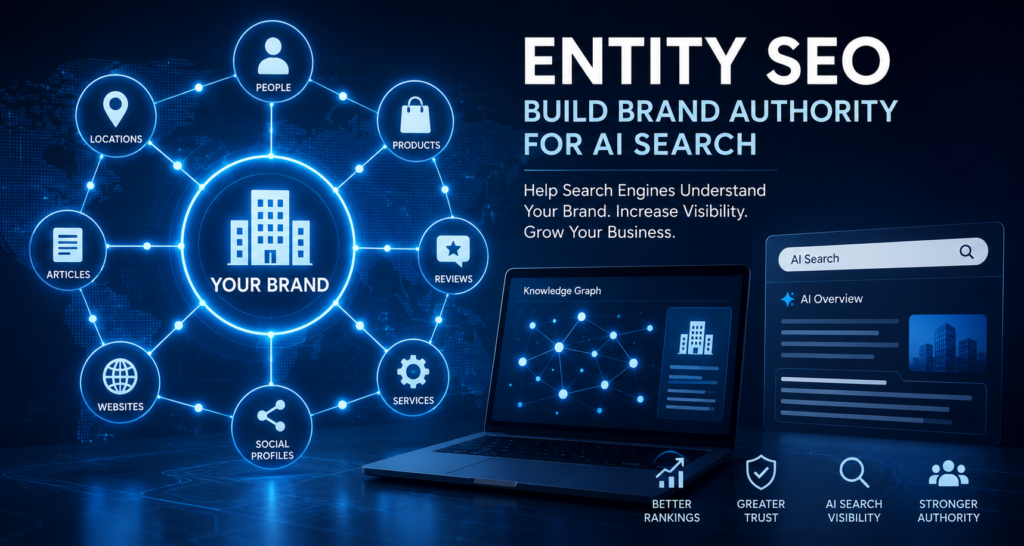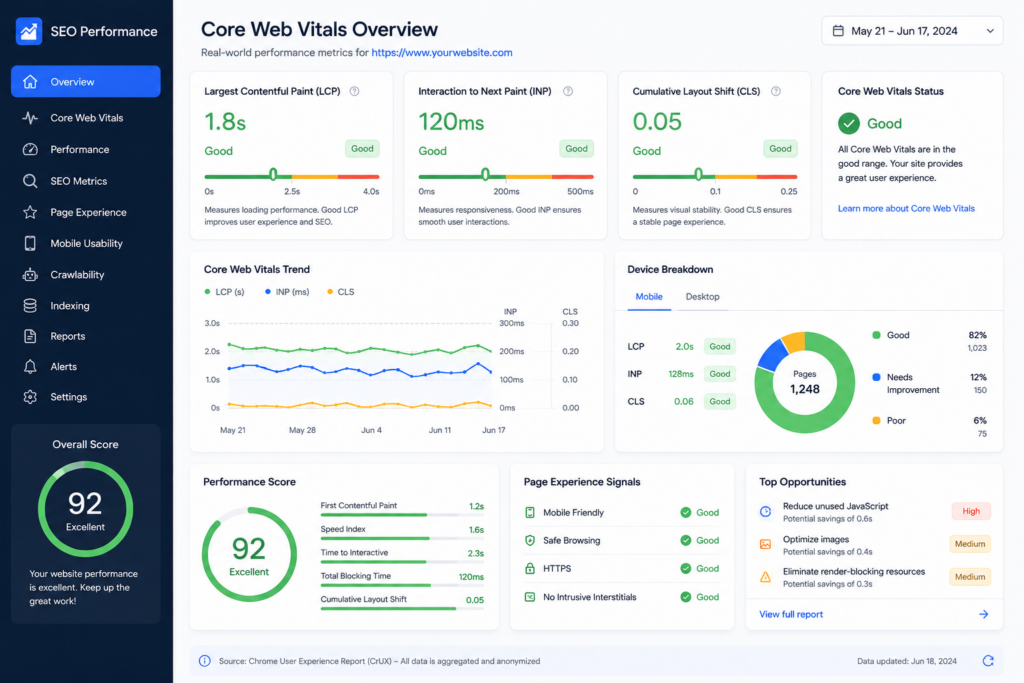
Search engines are no longer looking only at keywords. In 2026, they are getting better at understanding brands, people, places, services, and relationships between topics. This is where Entity SEO becomes important.
Entity SEO is the process of helping search engines clearly understand who your brand is, what your business does, where it operates, and how it connects to other trusted information online. Instead of focusing only on individual keywords, Entity SEO builds a stronger identity for your brand across your website, search results, business profiles, structured data, and trusted mentions.
For businesses that want to grow visibility in traditional search and AI-powered search, Entity SEO is becoming a major part of modern optimization. It works closely with SEO for AI Search in 2026, Answer Engine Optimization, and structured data optimization.
What Is Entity SEO?
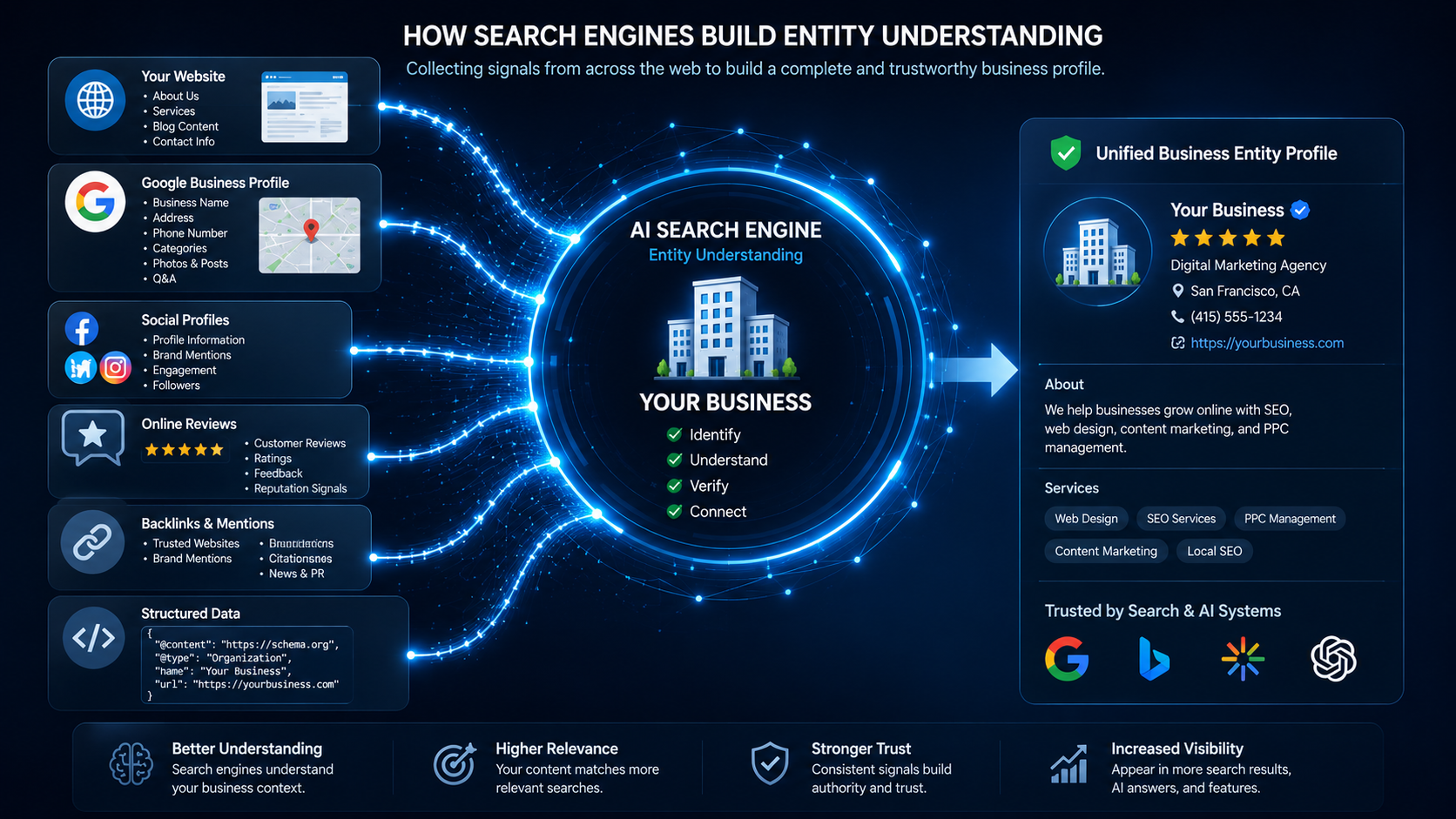
Entity SEO focuses on helping search engines understand your brand as a real, recognizable subject. An entity can be a business, person, product, service, location, organization, or concept. For example, your business name, website, services, social profiles, reviews, and locations can all help search engines form a clearer picture of your brand.
Traditional SEO often focuses on keywords such as “web design services” or “SEO agency.” Entity SEO goes deeper by helping search engines understand the business behind those terms. This can improve trust, relevance, and visibility across search results.
Why Entities Matter in Modern Search
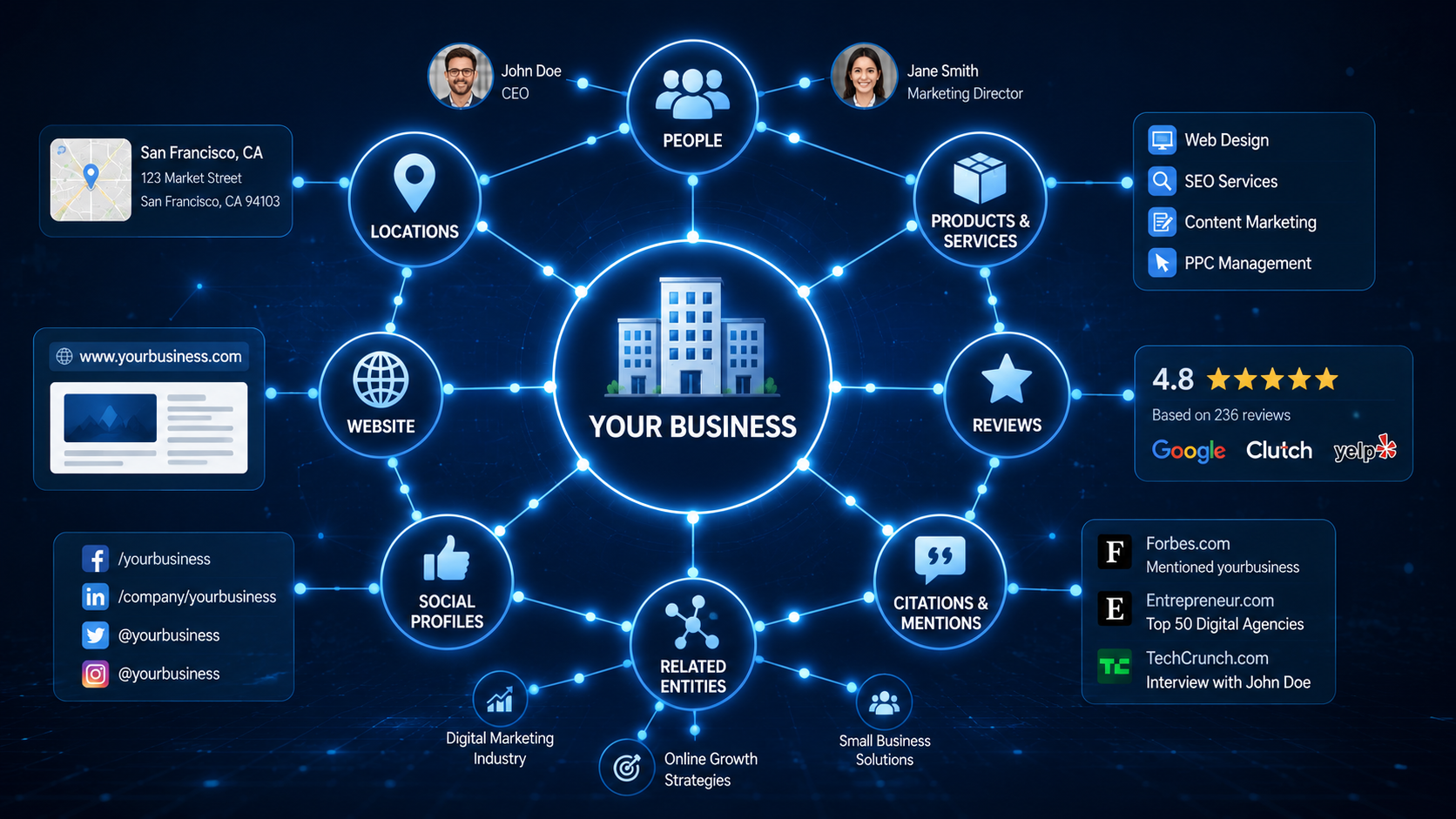
Search engines want to provide accurate answers. To do that, they need to understand relationships. They need to know that a business is connected to a website, services, reviews, locations, authors, social profiles, and industry topics.
Google’s SEO documentation continues to emphasize helpful content, clear site structure, and reliable information. These same ideas support entity understanding. You can review Google’s SEO starter guide here: Google SEO Starter Guide.
How Search Engines Understand Your Brand
Search engines collect information from many sources. They look at your website, your structured data, your business listings, your backlinks, your social profiles, and mentions across trusted websites. When this information is consistent, search engines can better understand your brand.
Your Website Is the Main Source
Your website should clearly explain who you are, what you offer, who you serve, and why your business is trustworthy. Important pages such as your homepage, about page, service pages, blog posts, and contact page all support brand understanding.
Strong website structure also matters. Internal links help search engines see how your pages connect. For example, this post can connect naturally to The Role of Content in SEO, SEO Best Practices, and The Importance of Professional Web Design for Your Business.
Structured Data Adds More Context
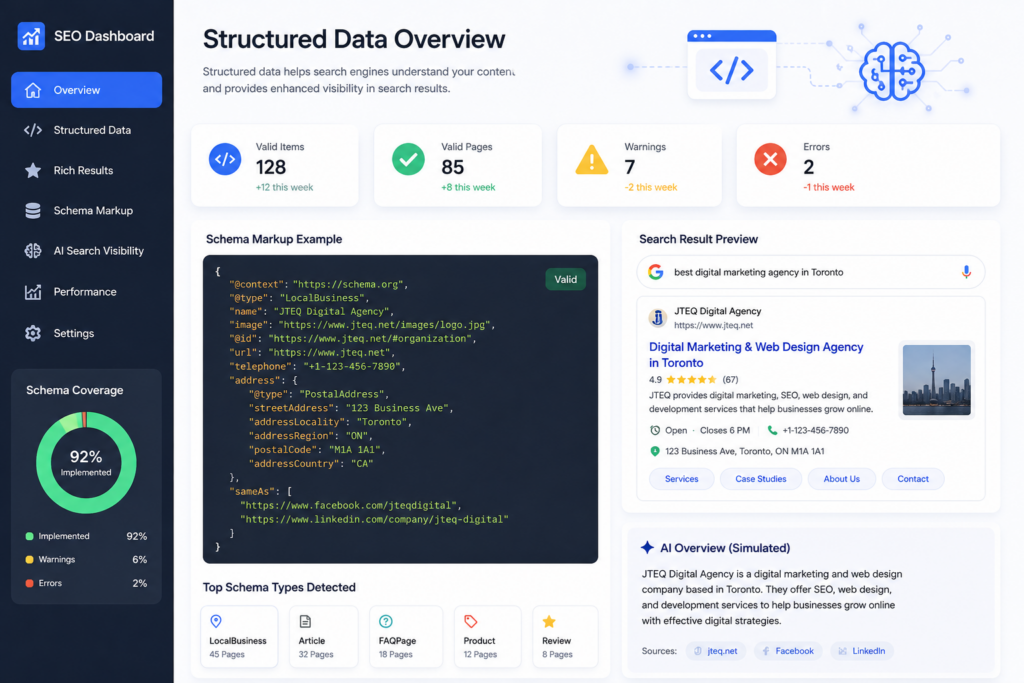
Structured data helps search engines understand important details about your business and content. It can identify your organization, articles, services, products, reviews, and local business information.
Google recommends structured data because it helps search engines better interpret content and qualify pages for certain search features. You can read Google’s structured data guide here: Google Structured Data Guide.
Why Schema Markup Supports Entity SEO
Schema markup can connect your business name, website URL, logo, social profiles, address, services, and other key details. This creates clearer signals about your brand identity.
For example, Organization schema can help define your business. LocalBusiness schema can help define location-based details. Article schema can help clarify blog content. You can also explore schema types directly through Schema.org.
How Entity SEO Helps AI Search Visibility
AI-powered search experiences need reliable sources to generate useful answers. When your brand entity is clear and consistent, AI systems may better understand your website and how it relates to a user’s question.
This does not mean Entity SEO guarantees inclusion in AI results. However, it can improve clarity, authority, and trust signals. Google’s guidance on AI features explains that websites should continue following SEO best practices and creating helpful, accessible content. You can read more here: Google AI Features and Your Website.
AI Search Relies on Context
AI search does not only match exact keywords. It tries to understand meaning. If someone searches for the best digital marketing strategy for a small business, AI systems may look for sources that explain SEO, web design, content, local visibility, and performance together.
This is why building topical authority is important. Your previous articles on AI Overviews and AI Mode, Core Web Vitals and AI Search, and How SEO and Graphics Work Together help support this topic cluster.
How to Strengthen Your Brand Entity
Entity SEO starts with consistency. Your brand name, website, service descriptions, contact details, and social profiles should match across the web. Inconsistent information can make it harder for search engines to understand and trust your business.
Keep Brand Information Consistent
Make sure your business name, website URL, phone number, address, and service descriptions are consistent on your website, business listings, social media pages, and directories. This is especially important for local SEO.
If your business depends on local visibility, connect this strategy with Mastering Local SEO: How to Rank Higher in Local Search Results.
Create Clear Service Pages
Each service page should explain one main service clearly. Avoid combining too many unrelated services into one page. Clear service pages help search engines understand what your business offers.
For example, a web design page should explain your design process, benefits, user experience approach, and conversion goals. An SEO page should explain keyword research, technical SEO, content optimization, and reporting.
Use Internal Links Strategically
Internal links help connect your brand topics. They guide users and search engines to related pages. For example, an Entity SEO article can link to content about technical SEO, content marketing, local SEO, AI search, and website performance.
Helpful internal links for this topic include How to Optimize Your Website for Speed and Performance, Why Mobile Optimization Is Crucial for Your SEO Strategy, and The Importance of a Responsive Website Design for SEO.
Entity SEO and Content Strategy
Content is one of the strongest ways to build entity understanding. Every blog post, service page, and guide should support a clear topic connected to your business expertise.
Build Topic Clusters
A topic cluster is a group of related pages that support one larger subject. For example, your AI search cluster can include articles about AI Overviews, Answer Engine Optimization, structured data, Core Web Vitals, and Entity SEO.
This helps search engines understand that your site is not publishing random articles. Instead, it is building authority around modern SEO and digital visibility.
Add Real Expertise
Generic content is easy to ignore. Strong content includes practical explanations, examples, original insights, and clear recommendations. Google’s helpful content guidance explains the importance of creating content for people first. Read Google’s helpful content guidance.
What Helpful Entity Content Looks Like
Helpful entity-focused content answers real questions. It explains the topic clearly, links to related resources, includes accurate details, and supports the reader’s next step. It should also avoid keyword stuffing and vague claims.
Entity SEO and Trust Signals
Trust signals help search engines and users feel more confident about your business. These signals can include reviews, testimonials, author information, case studies, certifications, social profiles, and mentions from other trusted websites.
Reviews and Brand Mentions Matter
Reviews show that real people interact with your business. Brand mentions across trusted websites can also help reinforce your identity. Even when a mention does not include a backlink, it may still support broader brand recognition.
About Pages and Author Details Help
Your about page should explain who your business is, what it does, and why people can trust it. Blog content can also benefit from author information, especially when discussing technical or professional topics.
Common Entity SEO Mistakes
Many businesses unintentionally weaken entity signals by using inconsistent information or publishing disconnected content.
Avoid These Mistakes
- Using different business names across platforms
- Publishing thin content that does not support your expertise
- Ignoring structured data
- Failing to link related pages together
- Using outdated service descriptions
- Neglecting local listings and social profiles
- Creating content without a clear topic strategy
How to Measure Entity SEO Progress
Entity SEO is not measured by one single metric. Instead, look at several signs of improvement over time.
Useful Metrics to Track
- Growth in branded searches
- Improved impressions in Google Search Console
- More visibility for service-related keywords
- Better engagement on key pages
- More consistent business listings
- Increased mentions from trusted websites
- Improved local search visibility
These signals can show whether your brand is becoming easier to recognize and understand online.
Final Thoughts
Entity SEO is an important part of modern search strategy. As search engines and AI systems become better at understanding meaning, businesses need to build clearer brand identities online.
The goal is not just to rank for keywords. The goal is to help search engines understand your business as a trusted entity connected to specific services, topics, locations, and expertise.
By improving structured data, internal linking, content quality, brand consistency, and trust signals, your website can build stronger visibility in both traditional search and AI-powered search experiences.
To continue building this SEO cluster, readers can explore SEO for AI Search in 2026, Answer Engine Optimization in 2026, How Structured Data Helps Websites Rank Better in AI Search, and Why Core Web Vitals Still Matter for SEO and AI Search in 2026.