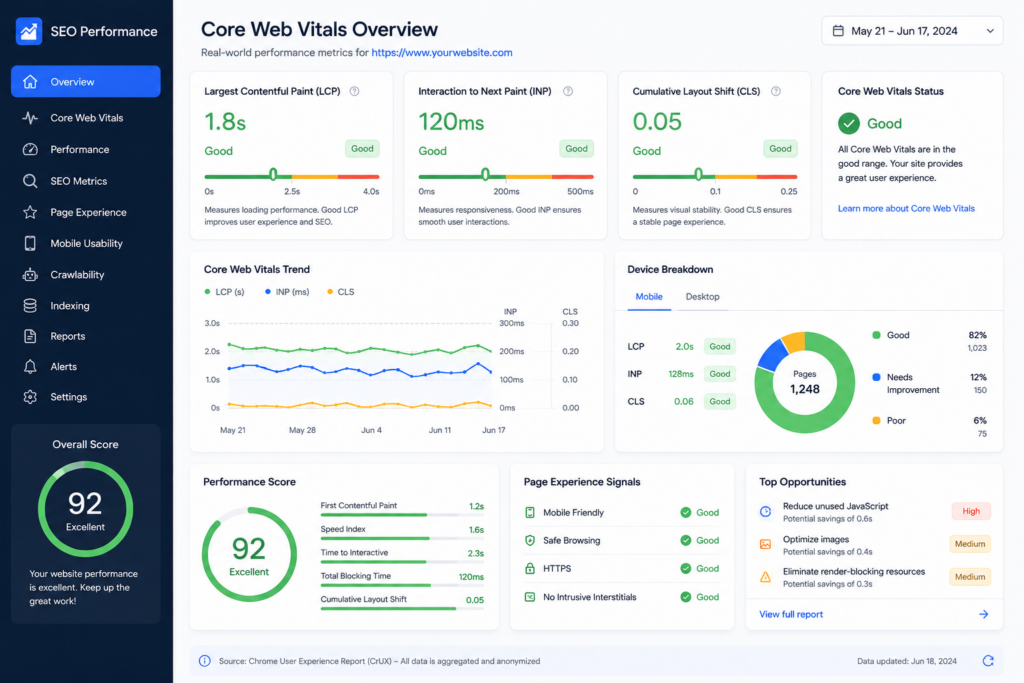
Website performance continues to play an important role in SEO, user experience, and modern search visibility. Even as AI-powered search becomes more advanced, Google still emphasizes the importance of fast, responsive, and user-friendly websites. This is one reason Core Web Vitals remain relevant in 2026.
Core Web Vitals are a set of performance metrics designed to measure how users experience a website. These metrics focus on loading speed, visual stability, and interaction responsiveness. Websites that perform well in these areas often create smoother experiences for visitors, which may support stronger engagement and search visibility.
If you are already exploring AI-focused SEO strategies, you may also want to read SEO for AI Search in 2026: What Businesses Need to Change Now and Answer Engine Optimization in 2026: How to Win Visibility Without the Click.
What Are Core Web Vitals?
Core Web Vitals are performance metrics introduced by Google to evaluate real-world website usability. They measure how quickly content loads, how stable the page appears during loading, and how responsive the site feels during interaction.
Google officially documents these metrics through its Core Web Vitals initiative and continues updating recommendations as user behavior evolves. Learn more about Core Web Vitals.
The Three Main Core Web Vitals
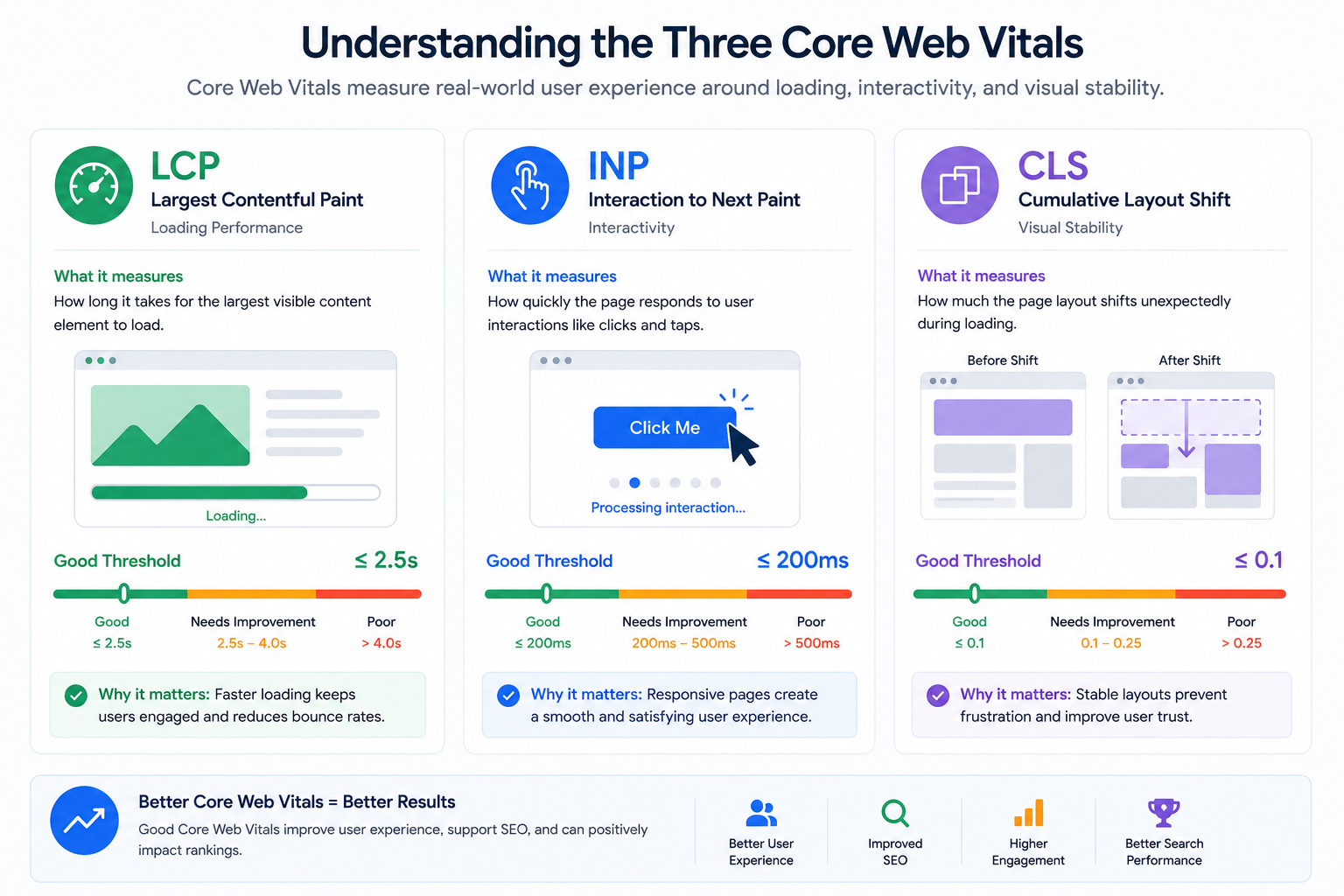
The current Core Web Vitals focus on three primary metrics:
- Largest Contentful Paint (LCP) measures loading performance.
- Interaction to Next Paint (INP) measures responsiveness and interaction speed.
- Cumulative Layout Shift (CLS) measures visual stability.
Each metric reflects a different part of the user experience. Together, they help website owners understand whether a page feels smooth and reliable for visitors.
Why Core Web Vitals Still Matter in 2026
Some businesses assume that AI-powered search has replaced traditional SEO priorities. In reality, Google still relies heavily on website quality signals, including performance and usability.
Fast-loading, stable websites create better experiences for users. This may improve engagement, reduce bounce rates, and support stronger visibility across both traditional and AI-powered search environments.
User Experience Remains a Priority
Search engines increasingly prioritize websites that provide smooth experiences. A website that loads slowly, shifts unexpectedly, or responds poorly during interactions can frustrate users.
Google’s documentation on page experience explains that usability continues to play a role in how websites are evaluated. Read Google’s page experience guidance.
Performance Supports AI Search Visibility
AI-powered search systems still depend on accessible, crawlable, and technically reliable websites. Slow or poorly optimized pages may reduce content accessibility and limit engagement opportunities.
This is one reason technical SEO continues to matter alongside content quality.
Largest Contentful Paint (LCP)
LCP measures how quickly the main visible content on a page loads. This could include a large image, heading, or content block.
Why LCP Matters
If the main content loads slowly, users may feel the page is unresponsive. Faster loading helps create a better first impression and improves usability.
Common ways to improve LCP include:
- Optimizing image sizes
- Reducing server response times
- Using efficient hosting
- Minimizing render-blocking resources
If you want additional performance tips, see How to Optimize Your Website for Speed and Performance.
Interaction to Next Paint (INP)
INP measures how quickly a website responds when users click, tap, or interact with page elements. Google replaced First Input Delay with INP to better reflect real interaction responsiveness.
Google’s INP documentation explains how responsiveness affects user experience.
Why Responsiveness Matters
Users expect websites to respond quickly. Delays during interactions can make websites feel broken or difficult to use.
Improving responsiveness often involves:
- Reducing excessive JavaScript
- Optimizing scripts and animations
- Improving browser rendering efficiency
- Reducing heavy third-party tools
Cumulative Layout Shift (CLS)
CLS measures visual stability during page loading. A high CLS score means elements move unexpectedly while users are trying to interact with the page.
Why Visual Stability Matters
Unexpected movement can frustrate users and create poor experiences. For example, buttons shifting while users try to click may lead to accidental actions.
Common ways to reduce CLS include:
- Setting image dimensions properly
- Reserving space for ads and embeds
- Reducing layout shifts caused by fonts
- Loading elements more consistently
Core Web Vitals and Mobile Optimization
Mobile performance remains especially important because many users browse primarily on smartphones and tablets. Responsive design and mobile usability continue to influence user experience.
You may also want to revisit Why Mobile Optimization Is Crucial for Your SEO Strategy and The Importance of Mobile-Friendly Websites for SEO and User Experience.
Responsive Websites Perform Better
Responsive websites adapt more effectively across different screen sizes and devices. This supports stronger usability and accessibility for visitors.
Technical SEO and Site Structure
Core Web Vitals are only one part of technical SEO. Search engines also evaluate crawlability, structured data, internal linking, and overall site architecture.
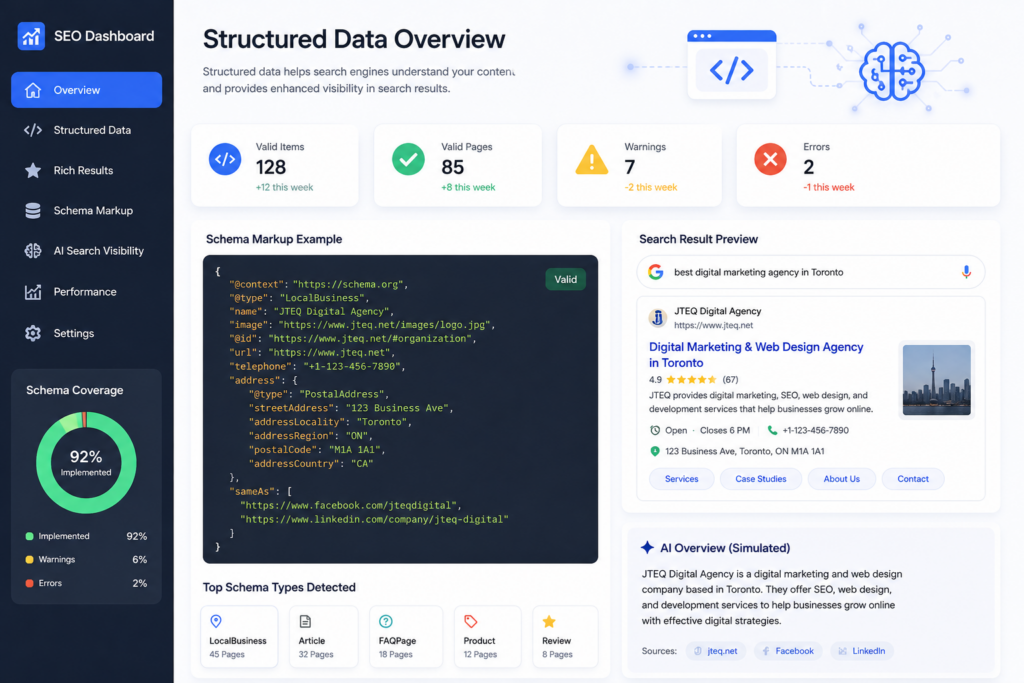
For example, structured data helps search engines better interpret website content and relationships. You can learn more in How Structured Data Helps Websites Rank Better in AI Search.
Internal Linking Supports Navigation
Internal links improve content discovery for both users and search engines. They help organize website topics and support stronger topical relevance.
Related content on your site includes:
- SEO Best Practices: What You Need to Know
- The Role of Content in SEO
- The Importance of Professional Web Design for Your Business
How to Measure Core Web Vitals
Several tools help website owners measure performance and identify issues.
Useful Performance Tools
These tools provide performance reports, optimization suggestions, and real-world user data.
Common Core Web Vitals Mistakes
Some websites focus only on visual design while overlooking performance and usability.
Avoid These Issues
- Uploading oversized images
- Using too many heavy scripts
- Ignoring mobile responsiveness
- Overloading pages with animations
- Neglecting technical SEO maintenance
Final Thoughts
Core Web Vitals still matter because they reflect real user experience. Websites that load quickly, respond smoothly, and remain visually stable often create better experiences for visitors.
As AI-powered search continues evolving, technical SEO and website usability remain important foundations. Strong performance helps search systems access content efficiently while improving engagement for users.
For additional SEO insights, continue exploring Mastering Local SEO, How SEO and Graphics Work Together to Drive Traffic, and Graphic Design in 2025: From Static to Interactive Branding.