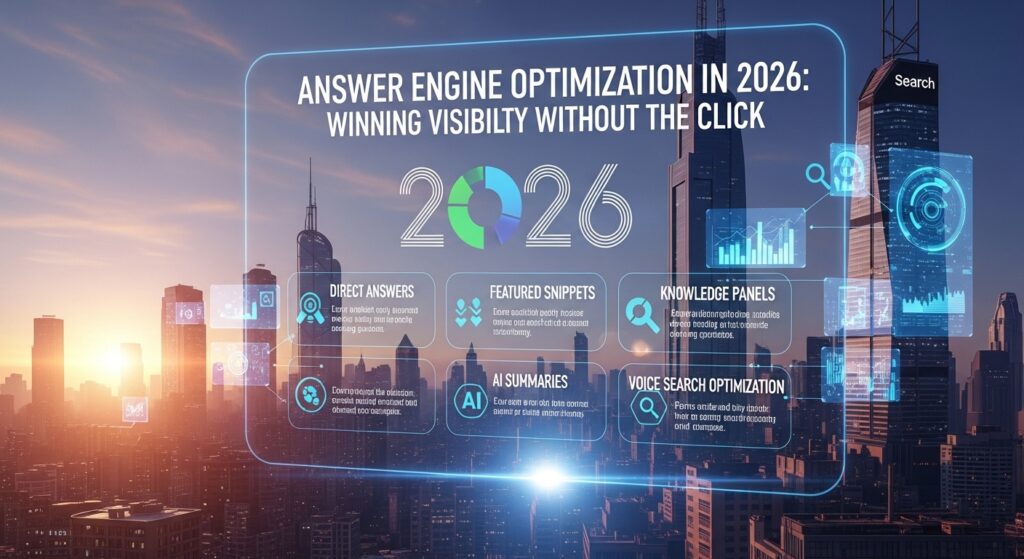
Search is no longer just a list of ten blue links. In 2026, people increasingly discover businesses through AI-generated answers, conversational search, and zero-click results that summarize information before a user ever lands on a website. Google’s current guidance for AI features makes that shift clear: websites still need strong SEO fundamentals, but they also need content that is easy to understand, genuinely useful, and technically sound enough to be surfaced in AI-powered experiences. That is where answer engine optimization comes in.
Answer engine optimization, often shortened to AEO, is the practice of improving your website so it can earn visibility in AI summaries, answer boxes, conversational search experiences, and other search results that prioritize direct answers. For businesses, this matters because search visibility is no longer measured only by clicks. Sometimes the first win is becoming the trusted source that gets referenced, remembered, and chosen later.
What Is Answer Engine Optimization?
Answer engine optimization is the next layer on top of traditional SEO. Standard SEO helps your pages get crawled, indexed, and ranked. AEO helps your content get understood, selected, and cited in answer-driven search environments. It focuses on clarity, structure, authority, and usefulness.
That does not mean traditional SEO is outdated. In fact, your core SEO foundation still matters a great deal. Strong internal linking, page experience, mobile usability, content quality, and clean technical setup remain essential. If you need a refresher on those fundamentals, your readers can continue to The Role of Content in SEO: How to Create SEO-Friendly Content and How to Optimize Your Website for Speed and Performance.
Why AEO matters more in 2026
People are asking longer questions, comparing options inside AI search, and expecting direct responses. In practical terms, that means a thin page written only for one keyword has less value than a page that clearly explains a topic, answers follow-up questions, and guides the reader to the next step. Businesses that adapt early have a better chance of staying visible as search habits keep changing.
How Answer Engines Choose What to Surface
Answer engines do not just look for a repeated keyword. They look for content that appears credible, well-structured, relevant, and easy to interpret. A strong answer-focused page usually includes a clear topic, direct subheadings, concise explanations, supporting detail, and logical relationships between related pages.
Content clarity beats content fluff
If a page rambles, hides the answer, or fills space with generic statements, it is less likely to be useful in answer-driven search. The better approach is to state the point early, organize the page clearly, and expand only where more context actually helps the reader.
What that looks like on a real business website
A service page should explain what you do, who it is for, how the process works, and why your approach is different. A blog post should answer a real question, not just repeat variations of the same phrase. A local page should include location context, trust signals, and supporting details. This is also why your existing post on SEO for AI Search in 2026: What Businesses Need to Change Now is such a natural internal link for this topic.
How to Optimize Content for Answer Engines
The first step is to write for intent, not just keywords. Ask what the searcher is trying to achieve. Are they learning a concept, comparing providers, solving a problem, or deciding whether to buy? Once you know that, structure the page to match the journey.
Use headings that match real questions
 Good headings improve readability for users and help search systems understand the page. Instead of vague headings like “More Information,” use direct ones such as “What Is Answer Engine Optimization?” or “How to Optimize Content for AI Search.”
Give the short answer first, then expand
One of the most effective AEO tactics is simple: answer the question immediately, then provide the detail underneath. This format works well for featured snippets, AI summaries, and busy human readers.
Build supporting topic clusters
One article rarely does all the work on its own. Search systems gain confidence when your site covers a topic from multiple connected angles. For example, this post can naturally link to your content on content quality, speed optimization, responsive design, and local SEO. That creates a clearer topical cluster and helps readers move deeper into your site.
Useful internal links for this post include The Importance of a Responsive Website Design for SEO and Mastering Local SEO: How to Rank Higher in Local Search Results.
Technical SEO Still Powers Answer Visibility
Even the best content can struggle if the website behind it is weak. Answer engines still rely on pages they can crawl, parse, and trust. That makes technical SEO part of AEO, not separate from it.
Pay attention to structure, speed, and schema
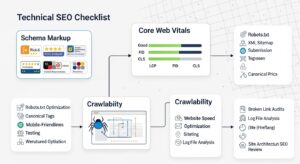
 Your website should load quickly, work well on mobile devices, and present content in a clear HTML structure. Relevant structured data can also help search systems understand important details about your business and content. Google’s official documentation on AI features, structured data, and ranking systems is useful here: AI features and your website, structured data markup, and Google Search ranking systems.
INP and page responsiveness matter
Website performance is no longer only about loading fast. Responsiveness also matters, especially after Interaction to Next Paint became part of the Core Web Vitals framework. If a site feels slow when users tap, click, or interact, that weakens the experience. For a helpful technical reference, see web.dev’s INP guide.
What Businesses Should Stop Doing
Many websites still publish thin pages built around slightly different keyword versions, hoping volume will create visibility. That approach is weaker now. If your pages sound interchangeable with dozens of others on the web, answer engines have little reason to treat them as the best source.
Avoid these common mistakes
- Publishing generic AI-written content with no original expertise
- Burying the answer deep in long introductions
- Using weak internal links that do not help the reader
- Ignoring technical issues like poor mobile usability and slow interaction
- Creating isolated blog posts with no supporting topic cluster
How to Measure AEO Success
 AEO success is broader than pageviews alone. Yes, traffic still matters, but so do impressions, branded searches, assisted conversions, lead quality, and how often your content appears in answer-oriented search environments. Businesses should watch Google Search Console, on-site engagement, conversions, and brand visibility trends together instead of relying on a single metric.
Final Thoughts
Answer engine optimization in 2026 is really about raising the quality bar. The websites that win are not necessarily the ones publishing the most pages. They are the ones publishing the clearest, most useful, and most technically reliable pages.
If you already have strong foundational SEO, the next step is to make your content easier to understand, easier to trust, and easier to connect across your site. Start with your best existing pages, improve their structure, add smarter internal links, strengthen originality, and support them with related articles. That is how you build visibility in a search environment where the best answer increasingly wins before the click even happens.